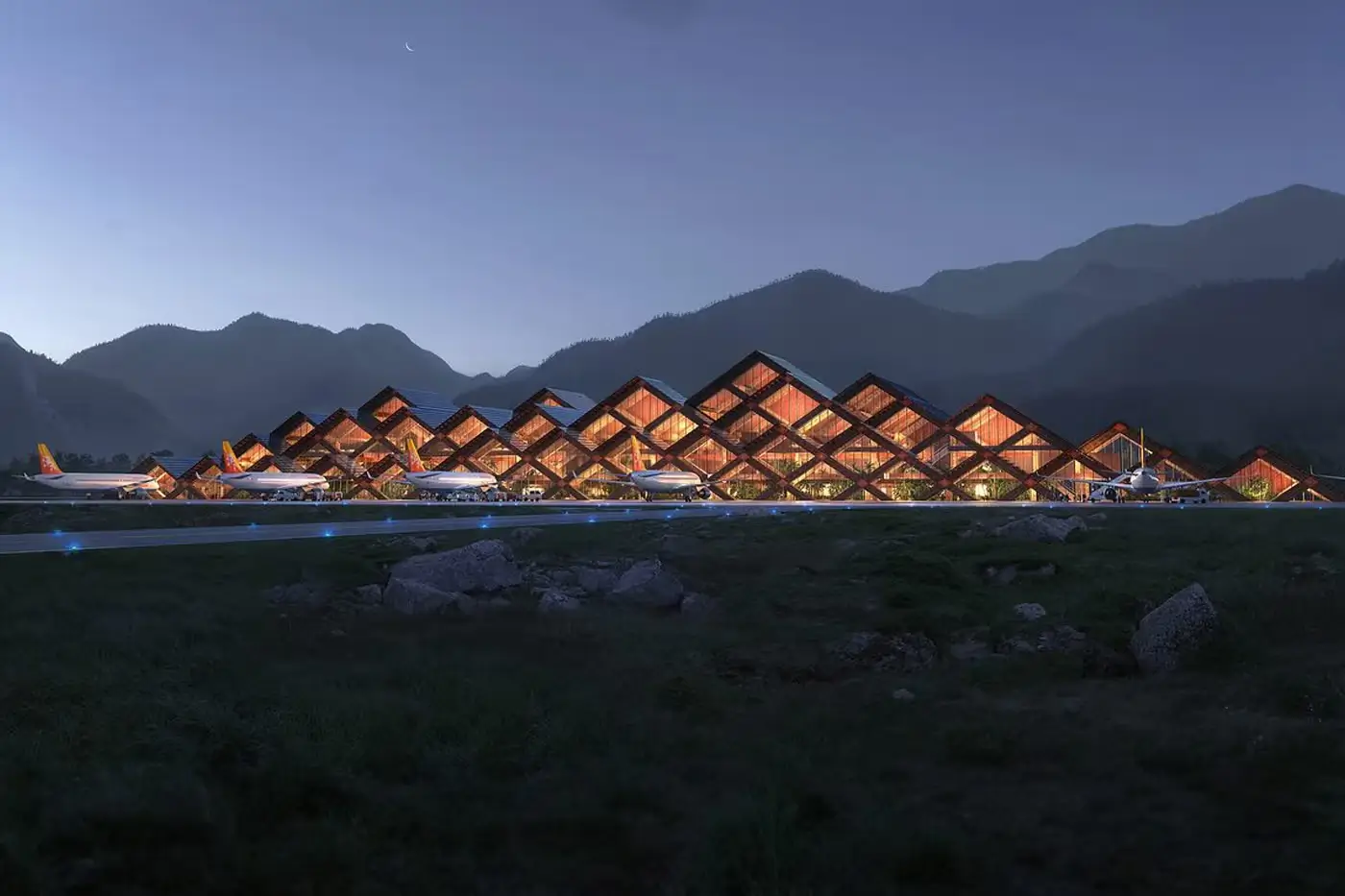
In the southern plains of Bhutan, an urban development project is taking shape that sets out to redefine city planning for the 21st century. The Gelephu Mindfulness City (GMC), announced by His Majesty King Jigme Khesar Namgyel Wangchuck on December 17, 2023 and established as a Special Administrative Region by Royal Charter on 10 February 2024, represents a vision that integrates economic growth with mindfulness, holistic living and sustainability. This article explains what makes GMC unique, its foundational principles, and why it has captured global attention as a potential blueprint for future urban development.
The Vision Behind Gelephu Mindfulness City
Spanning about one million acres, roughly 4,000 square kilometres and about 10% of Bhutan, the Gelephu Mindfulness City is situated on the southern plains below the Himalayan foothills, on Bhutan's border with Assam, India. This location is no accident; it deliberately leverages regional connectivity between South Asia and Southeast Asia, positioning GMC as a crucial nexus in one of the world's most economically dynamic regions.
What truly sets GMC apart, however, is not merely its scale or location, but its underlying philosophy. While special economic zones and planned cities exist worldwide, GMC stands as the world's first "Mindfulness City," anchored firmly in Bhutan's Gross National Happiness (GNH) philosophy. Prime Minister Tshering Tobgay describes GMC as "gross national happiness 2.0," explaining, "We've applied GNH throughout the country. The approach has produced results. But how do we apply GNH in a modern urban environment?"
This question forms the cornerstone of GMC's development approach. Rather than prioritizing economic metrics alone, GMC embraces what its founders call "mindful capitalism", a holistic framework that balances profit with ecological harmony, spiritual contentment, and social well-being. As the King proclaimed during the announcement, "It will be one-of-a-kind, anchored on the vision and values of GNH. It will be a Mindfulness City, encompassing conscious and sustainable businesses, inspired by Buddhist spiritual heritage, and distinguished by the uniqueness of the Bhutanese identity."
Addressing National Challenges Through Innovative Urban Planning
The GMC initiative emerges against a backdrop of pressing national challenges. Bhutan currently grapples with 17.7% youth unemployment, resulting in a significant brain drain of talent overseas. In 2023 alone, approximately 1.5% of the population relocated to Australia for work and study opportunities. Simultaneously, the nation faces a declining birth rate of just 1.4 children per woman, portending a shrinking, aging population in the coming decades.
Tourism, traditionally a cornerstone of Bhutan's economy, has struggled to recover from the pandemic's impact, with foreign arrivals in 2023 reaching only one-third of 2019 levels.
GMC is a direct response to these challenges, creating employment opportunities, stemming the outflow of talent, and establishing a new economic hub that diversifies beyond traditional revenue sources. By developing a city that aligns economic growth with Bhutanese values, GMC aims to create opportunities that allow citizens to prosper without compromising their cultural identity or spiritual well-being.
Eight Priority Industries: A Holistic Approach to Development
What distinguishes GMC's economic model is its organization around eight priority industries, against which every expression of interest filed with the Gelephu Corporate Registration Office is assessed: Spiritual; Health and Wellness; Education and Knowledge; Agri-Tech and Forestry; Green Energy and Technologies; Finance and Digital Assets; Aviation and Logistics; and Tourism. Each is designed to foster innovation while maintaining Bhutan's commitment to mindfulness and environmental sustainability. Tourism runs through the spiritual, wellness and aviation clusters described here:
- Spirituality: At the heart of GMC lies a commitment to promoting mindfulness and Bhutanese cultural heritage. The city will establish a Vajrayana center of unprecedented scale in Buddhist history, consolidating religious and spiritual tourism while providing a foundation for the city's mindful approach to development.
- Health and Wellness: GMC aims to position itself as a global destination for holistic health, integrating traditional Bhutanese medicine with contemporary healthcare approaches. The eudaimonic healthcare center will offer both traditional and allopathic medicine, creating a whole-person wellness ecosystem.
- Education and Knowledge: Envisioned as a "City of Mindful Learning," GMC will host international-standard educational institutions that blend Bhutanese wisdom with modern global knowledge systems, fostering innovation grounded in mindfulness.
- Green Energy and Technologies: Leveraging Bhutan's abundant renewable energy potential, this cluster will drive technological innovation with sustainability at its core, positioning GMC as a clean technology hub.
- Finance and Digital Assets: The Gelephu Financial Services Office (GFSO) is the single regulator for banking, capital markets, payments, insurance and digital assets under the Financial Services Act 2025, and DK Bank, the first GMC-licensed bank, operates in nine currencies with digital asset services. GMC announced in January 2025 that digital assets such as Bitcoin, Ether and BNB would form part of its strategic reserves, one of the first jurisdictions globally to take such a step, and the 10,000 BTC Development Pledge followed in December 2025.
- Agri-Tech and Forestry: This cluster focuses on enhancing food security and sustainable agriculture practices, with commitments to organic food sources and innovative farming techniques showcased in greenhouses that blend ancient methods with modern agroscience.
- Aviation and Logistics: The development of Gelephu International Airport, which received its first international flight in December 2025, as a regional hub forms a crucial component of GMC's connectivity strategy, complemented by planned railway connections to neighboring regions.
Urban Design: Building with Nature
The physical manifestation of GMC's philosophy comes through its urban design, masterminded by Danish architect Bjarke Ingels in collaboration with ARUP and CISTRI. Rather than imposing a conventional urban grid upon the landscape, GMC's design philosophy centers on "Building with Nature."
The masterplan envisions a low-rise metropolis built around a network of inhabitable timber bridges, with no structure taller than the surrounding trees. Development is concentrated toward urban centers, with minimal, mostly residential structures near wildlife sanctuaries and farmlands. This approach preserves the region's biodiversity while creating a built environment that exists in harmony with nature rather than in opposition to it.
One of the most striking features of the design is the Temple-Dam on the Sankosh River, a run-of-river hydropower project that, in Ingels' words, embeds "the city's fundamental values into a cascading landscape of steps and landings, that like a 21st century Tiger's Nest will be a manmade monument to the divine possibility of a sustainable human presence on earth, turning engineering into art, and the forces of nature into power."
The Dzong (fortress)-inspired inhabitable bridges represent another innovative design element, containing the international airport, railway connections, healthcare facilities, and educational institutions. These structures embody the Bhutanese concept of bridges as "sacred connectors of people across isolated geographies, traditions and times."
Throughout the city, most vehicles will be electric, single-use plastics banned, and infrastructure powered entirely by renewable energy. The city is designed to promote cycling and pedestrian movement, creating a low-carbon urban environment that aligns with Bhutan's status as the world's first carbon-negative country.
Governance and Legal Framework: Autonomy with Purpose
To deliver its vision, GMC is a Special Administrative Region established under Royal Charter No. 1 of 2024, with full executive and legislative powers and an independent judiciary, administered by the Gelephu Mindfulness City Authority (GMCA). This governance structure provides the flexibility needed to create a business-friendly environment while maintaining alignment with Bhutanese values.
The GMC is led by a distinguished team, including Liew Mun Leong as CEO and former Prime Minister Dasho Dr. Lotay Tshering as Governor. Its Board of Directors comprises experienced figures in investment, infrastructure, education, and technology, with His Majesty the King serving as Chairman.
GMC's first law, the Application of Laws Act 2024, received Royal assent on December 26, 2024. Under it, as amended in 2025 and 2026, the received common law and equity of established common law jurisdictions apply in GMC, with applied statutes in Schedule A and applied financial services rules in Schedule B. GMC has since enacted its own Acts, all in English: the Companies Act 2025, Customs Act 2025, Employment Act 2025, Employment of Foreign Workforce Act 2025, Financial Services Act 2025 and Income Tax Act 2025, followed in 2026 by Acts on business names, limited liability partnerships, limited partnerships, partnerships, sale of goods and unfair contract terms. The Income Tax Act 2025 sets a 15% company rate, no capital gains tax, no withholding tax on dividends and 0% for non-citizen individuals to 31 December 2030. This legal system combines international standards with Bhutanese values.
Unlike conventional special economic zones that prioritize regulatory relaxation to attract any willing investor, GMC takes a more selective approach. Businesses are screened and invited, through an expression of interest to the Gelephu Corporate Registration Office (GCRO) assessed by the GMCA, based on their respect for the Bhutanese way of life, commitment to sustainable and equitable development, and recognition of Bhutan's sovereignty. This careful curation ensures that economic development aligns with the city's foundational principles.
Investment Opportunities: Mindful Capitalism in Action
GMC represents an investment opportunity without precedent in the region. Development is driven by foreign direct investment through companies registered with the GCRO under the Companies Act 2025, with land made available on lease, and companies have expressed interest in bioscience, data centers, education and energy.
The city's development focuses on three key areas: energy, connectivity, and skills. Hydropower will attract investments through competitive regional pricing, while other energy sources like wind, thermal, and solar will be harnessed to create a diverse renewable energy portfolio. Digital infrastructure and the international airport, open to international flights since December 2025, improve connectivity, while upskilling programs for Bhutanese citizens are complemented by foreign skilled workers on work passes under the Employment of Foreign Workforce Act 2025.
For Bhutanese citizens both at home and abroad, the "GMC Nation Building Bond", launched in November 2024, offers a direct investment opportunity in the city's development, initially focused on funding the international airport. This initiative allows the Bhutanese diaspora to contribute to their nation's future while securing a return.
Global Significance: A New Model for Urban Development
As urbanization accelerates globally and cities grapple with challenges of sustainability, social cohesion, and quality of life, GMC offers a compelling alternative model. By prioritizing mindfulness, environmental harmony, and holistic well-being alongside economic growth, GMC represents a potential paradigm shift in how we conceive of urban development in the 21st century.
The city's approach to digital assets and blockchain technology positions it at the forefront of financial innovation, while its environmental commitments align with growing global emphasis on sustainability. By creating a governance framework that carefully screens potential investors based on values alignment, GMC demonstrates how economic development can be guided by principles beyond mere profit maximization.
As Dr. Dorji Wangchuk, a communications scholar, describes it, Bhutan is "a living museum where the past, present, and future mingle seamlessly like nowhere else." GMC extends this unique characteristic into urban planning, creating a city that honors traditional wisdom while embracing technological innovation and global connectivity.
Conclusion: A Mindful Path Forward
The Gelephu Mindfulness City represents far more than just another urban development project, it embodies a fundamentally different approach to balancing economic growth with human well-being and environmental sustainability. As King Khesar declared, "It is an inflection point, a mandate and opportunity for us all, the King, the government, and the people, to join hands and work tirelessly to pave the road to the future."
The project's ambition is undeniable, and GMC offers a compelling vision of how cities might evolve to address the complex challenges of our time. By integrating mindfulness into every aspect of urban planning and economic development, GMC provides a blueprint that could influence urban development globally, demonstrating that prosperity need not come at the expense of well-being, cultural identity, or environmental health.
As the world watches this unprecedented experiment unfold in the Himalayan foothills, Gelephu Mindfulness City stands as a testament to the possibility of reimagining capitalism itself, creating an economic system that serves human flourishing in its fullest sense, rather than reducing prosperity to financial metrics alone. In doing so, GMC may well pioneer a path that other regions follow in the decades to come.
Image courtesy: Gelephu Mindfulness City and BIG (Bjarke Ingels Group)